A Woman Alone in a Beautiful Room Is Not Lonely
Loneliness is often confused with solitude.
And solitude, especially when chosen, has been unfairly misunderstood.
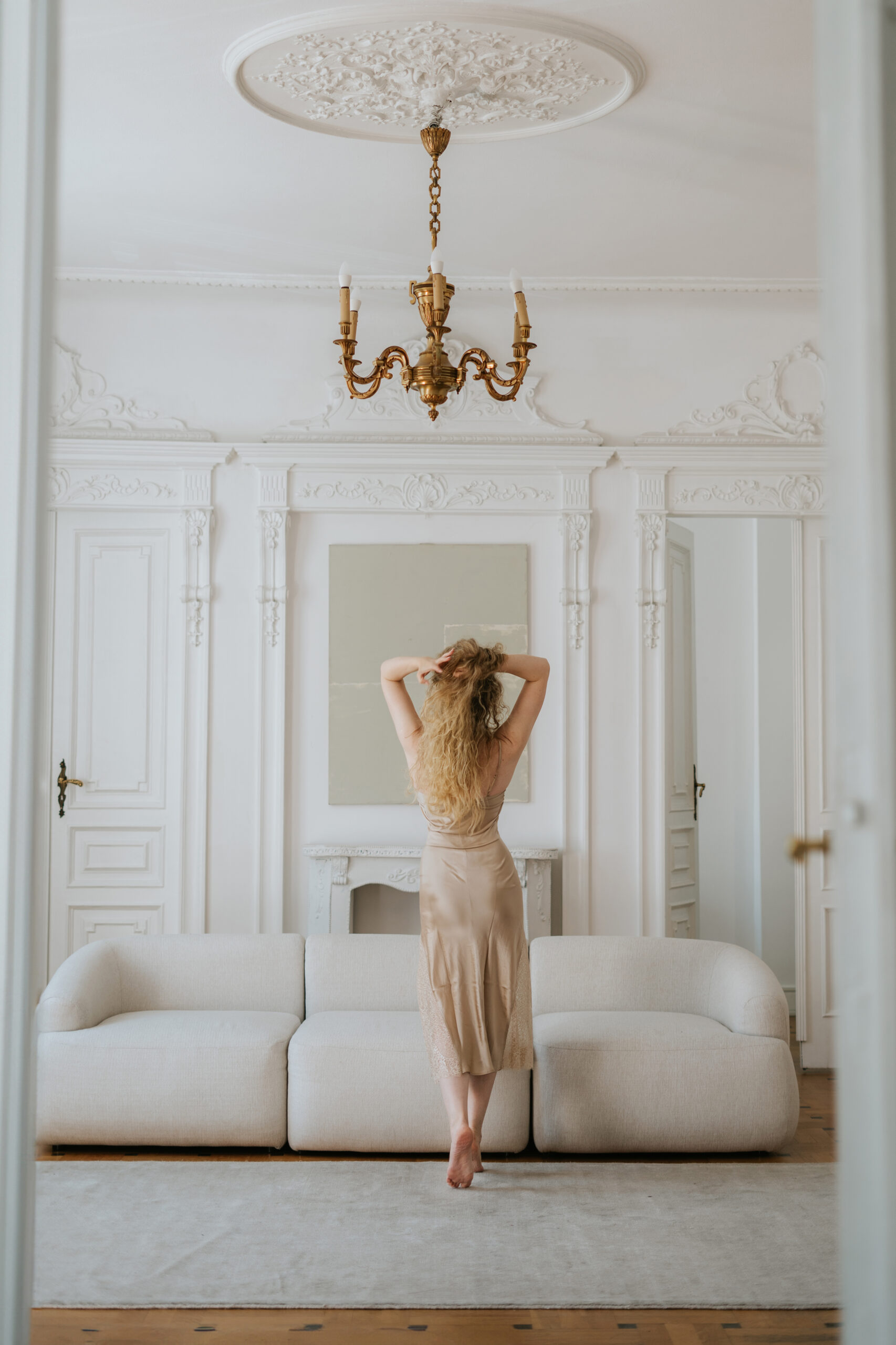
A woman alone in a beautiful room is not lonely.
She is contained.
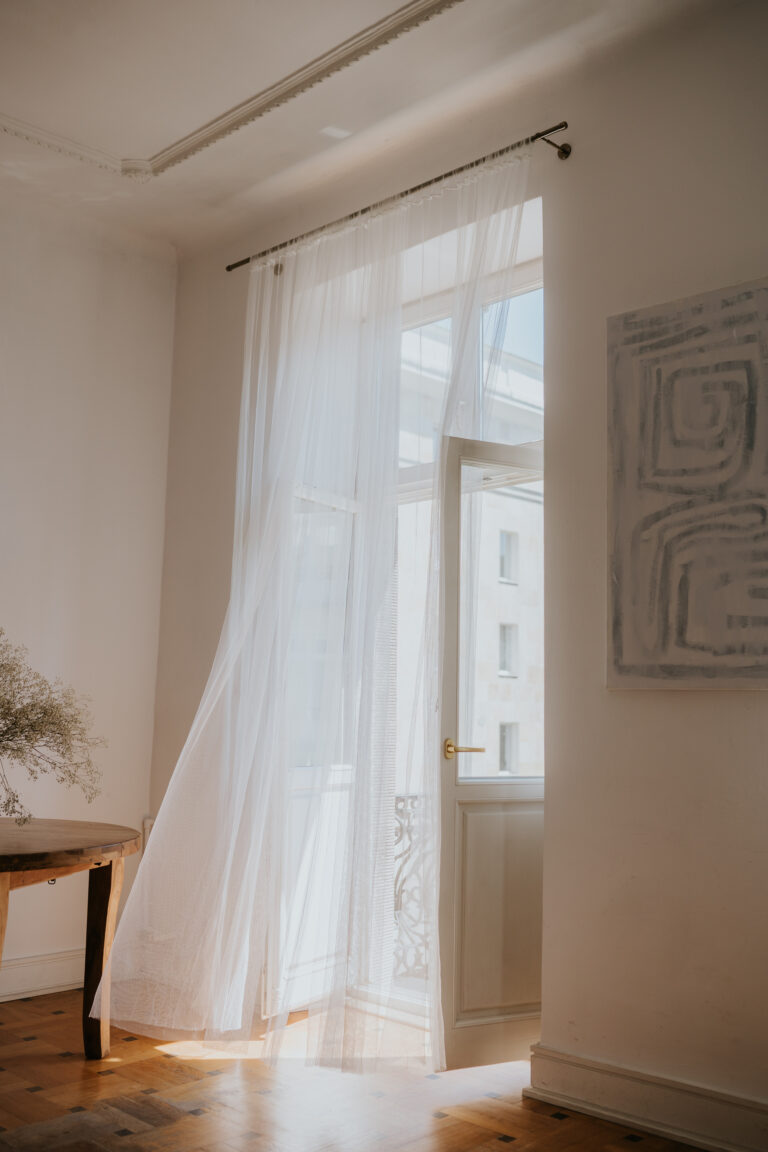
The room holds her presence without demanding explanation. Light rests on walls that were shaped with intention. Objects exist not to impress, but to accompany. In such a space, nothing insists on urgency. Nothing intrudes.
Solitude, in this sense, is not absence — it is fullness.
Modern culture is deeply uncomfortable with women who are at ease with their own company. A woman alone is quickly assumed to be waiting: for love, for purpose, for validation. Her stillness is read as lack, her silence as emptiness.
But there is another reality, quieter and far more grounded.
A woman who chooses solitude is not withdrawing from life. She is entering it more fully. She is listening to her own rhythm rather than negotiating it. She is allowing thoughts to complete themselves without interruption.
In a beautiful room, solitude becomes articulate.
The arrangement of space reflects an inner order. The care given to details mirrors care given to the self. This is not decoration as display, but as intimacy. A form of self-respect that does not require witnesses.
Beauty, when lived with privately, becomes stabilizing. It softens the nervous system. It slows the pace of thought. It creates a sense of being held — not by another person, but by one’s own discernment.
This is why solitude in such spaces feels restorative rather than isolating.
Loneliness arises when one feels unseen even in company. Solitude arises when one feels seen by oneself.
The distinction is subtle, but essential.
A woman comfortable in a beautiful room has learned something difficult in a culture of constant connection: that presence does not need to be shared to be real. That meaning does not need an audience.
She is not performing femininity.
She is inhabiting it.
Historically, women’s private spaces were often the only places where uninterrupted thought was possible. Writing desks, reading rooms, quiet corners — these were not escapes, but sanctuaries. Spaces where inner life could exist without apology.
Today, we are encouraged to externalize everything. To document, explain, and distribute our experiences in order for them to count. Solitude, by contrast, keeps its value internal.
A woman alone in a beautiful room does not disappear.
She gathers herself.
She learns to sit with complexity. To tolerate silence. To allow emotions to rise and settle without immediately resolving them. These capacities are not passive. They are forms of intelligence rarely taught, yet deeply necessary.
Such solitude is not about retreating from relationships. It is about entering them from a place of coherence rather than need. From wholeness rather than hunger.
When a woman knows how to be alone without feeling diminished, she does not seek connection to fill a void. She seeks it to share an already inhabited life.
This is not loneliness.
It is self-possession.
And in a world that constantly pulls women outward, there is quiet power in remaining inwardly anchored.
A beautiful room does not replace human connection.
But it can teach us how to keep our center when no one else is present.
And that is not emptiness.
That is grace.