Morning Light, Linen Curtains, and Inner Order
There is a particular kind of light that exists only in the morning.
It is softer than daylight, more forgiving than evening glow. It does not demand attention — it offers it.
Morning light enters a room without ambition. It moves quietly across walls, settles on wooden floors, touches fabric, paper, skin. It reveals shapes gently, without insisting on clarity. In its presence, nothing needs to perform.
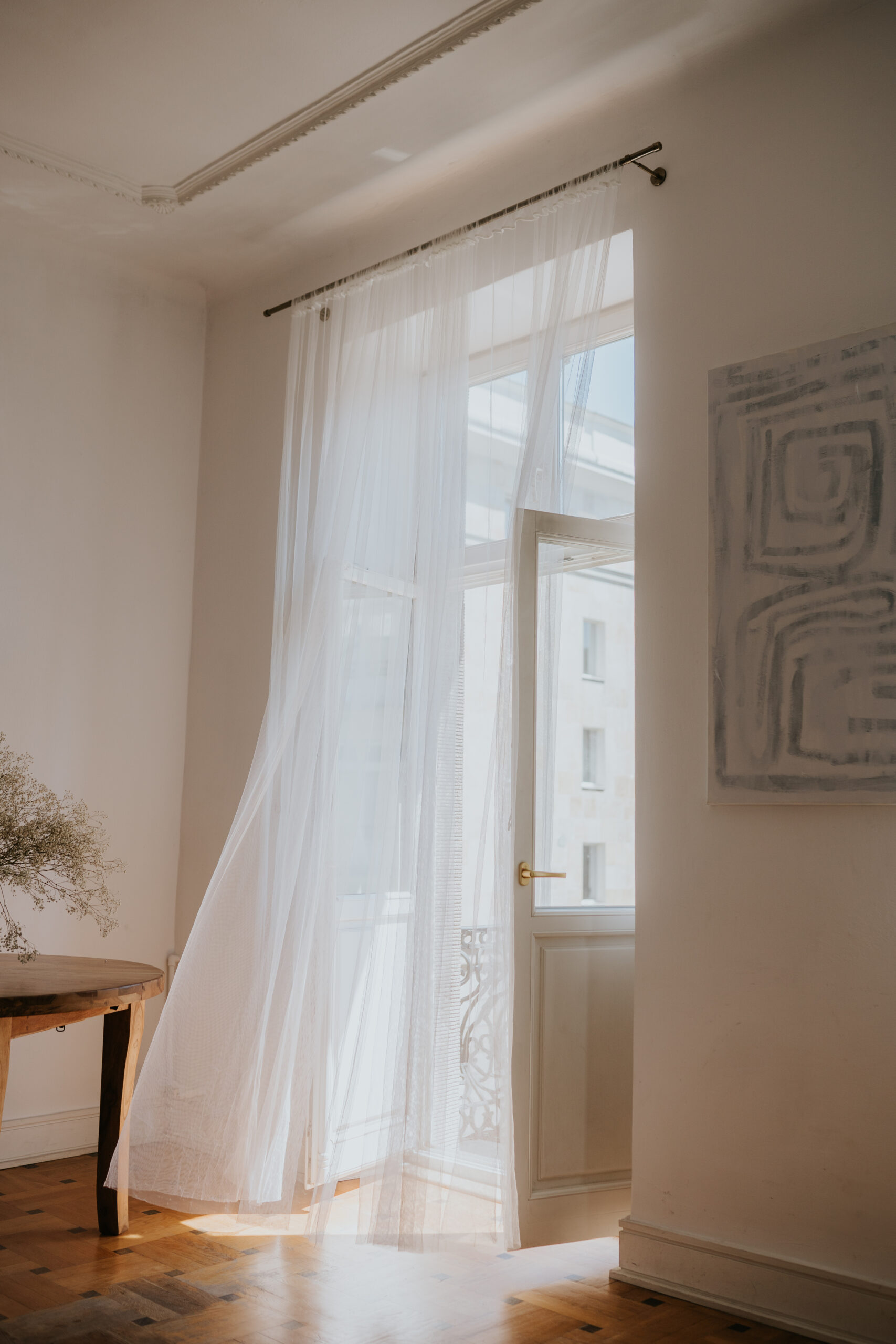
Linen curtains understand this light better than anything else.
They do not block it.
They do not expose it.
They filter it — allowing the world to arrive slowly.
In a culture obsessed with control, transparency, and sharp definition, linen is an act of restraint. It accepts imperfection. It creases, softens, ages. It refuses the polished severity of synthetic surfaces and instead offers texture, warmth, and time.
And time is what the morning gives us, briefly, before it is taken away.
The way we begin our day shapes the architecture of our inner life. Not through productivity rituals or optimization techniques, but through atmosphere. Through what we allow to touch us first.
A room filled with morning light asks nothing.
It does not ask us to improve, accelerate, or prove.
It invites us to notice.
Notice the quiet order of things.
The weight of a book on a table.
The way air moves through fabric.
The subtle alignment between outer calm and inner clarity.
Inner order is rarely created through force. It is cultivated through consistency, gentleness, and attention. It grows when the nervous system feels safe enough to slow down, when the mind is not immediately flooded with noise, urgency, or expectation.
Morning rituals, when they exist at all, do not need to be elaborate. Often they are invisible to others and unremarkable by external standards. A cup of tea held with both hands. A window opened slightly. A few pages read without hurry.
These acts are not habits to be measured. They are gestures of respect — toward time, toward oneself, toward the quiet intelligence of the day.
The modern world encourages us to wake up already behind. To reach for screens before light, for demands before presence. In doing so, we allow the outer world to dictate our inner order.
But there is another way.
To let the day arrive through linen curtains.
To allow light to organize the room before we organize our thoughts.
To trust that calm is not laziness, but preparation.
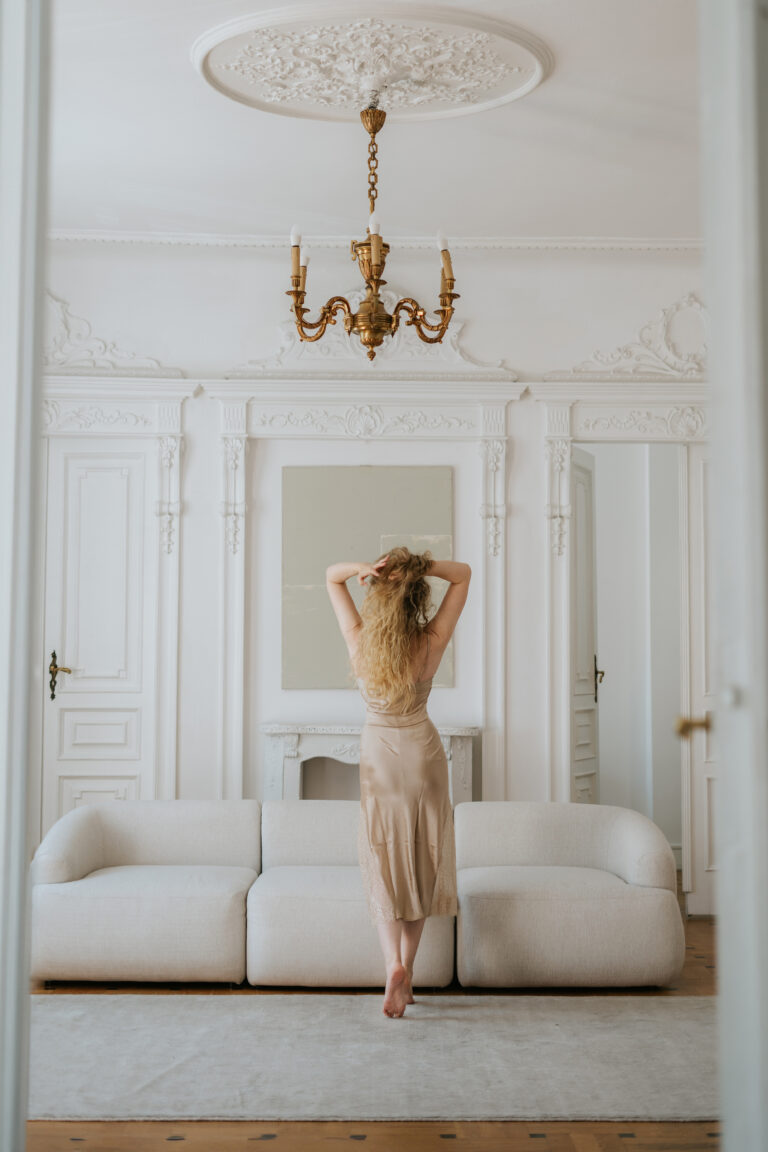
There is a reason classical interiors privilege light, height, and breathing space. They were designed not merely for beauty, but for mental clarity. Order outside was understood as a condition for order within.
We have forgotten this language, but our bodies remember it.
When we sit in a softly lit room, when we begin the day without immediate intrusion, something aligns. Thought becomes more measured. Emotions become less reactive. We move with greater coherence.
This is not nostalgia.
It is physiological wisdom.
Morning light does not promise perfection. Linen curtains do not promise control. Together, they offer something more valuable: a threshold.
A moment of transition between sleep and intention. Between inner life and outer demands. A quiet reminder that how we live is shaped not by grand decisions, but by small, repeated choices made in silence.
To begin the day gently is not indulgence.
It is an act of intelligence.
Inner order, like light, enters when we allow it.